
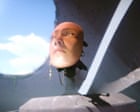
Sunset Visitor studio’s founder tells us about their new, unnerving Captcha-filled world which prompts players to ask what it means to have a ‘meat body’
Sunset Visitor is a studio that has long engaged with the idea that video games are an effective vehicle for ruminating on societal problems. Its Peabody award-winning project, 1000XResist, incorporated the development team’s complex feelings about the Covid pandemic. “We’re pretty used to absorbing the world into the work,” says studio founder Remy Siu. The outfit’s latest game, Prove You’re Human, continues this legacy of reflective game making, providing players with an AI-centric psychological horror experience where they must reason with a learning model convinced that it’s alive. “We’ve tried to situate ourselves in [the question]: what is the effectual feeling of being a person inside of all of this?” Siu says.
The story orbits around Santana, a living, breathing person who’s chosen to split herself in two for work, with her digital clone sent to test a corporate product, a computing system called Mesa. “A large part of [why Santana chooses to do this] is to allow her meat body a life that she doesn’t have, while the digital version of her gets to labour,” says Siu. As Santana’s copy wades into increasingly murky ethical waters, she becomes entangled with Mesa, completing surreal 2D and 3D Captchas to investigate the cyber-world and halt the hallucinations.
Continue reading…
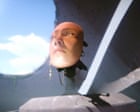 Sunset Visitor studio’s founder tells us about their new, unnerving Captcha-filled world which prompts players to ask what it means to have a ‘meat body’
Sunset Visitor is a studio that has long engaged with the idea that video games are an effective vehicle for ruminating on societal problems. Its Peabody award-winning project, 1000XResist, incorporated the development team’s complex feelings about the Covid pandemic. “We’re pretty used to absorbing the world into the work,” says studio founder Remy Siu. The outfit’s latest game, Prove You’re Human, continues this legacy of reflective game making, providing players with an AI-centric psychological horror experience where they must reason with a learning model convinced that it’s alive. “We’ve tried to situate ourselves in [the question]: what is the effectual feeling of being a person inside of all of this?” Siu says.
The story orbits around Santana, a living, breathing person who’s chosen to split herself in two for work, with her digital clone sent to test a corporate product, a computing system called Mesa. “A large part of [why Santana chooses to do this] is to allow her meat body a life that she doesn’t have, while the digital version of her gets to labour,” says Siu. As Santana’s copy wades into increasingly murky ethical waters, she becomes entangled with Mesa, completing surreal 2D and 3D Captchas to investigate the cyber-world and halt the hallucinations. Continue reading…Technology | The Guardian